
Jiuzhaigou Valley
Jiuzhaigou Valley (Jiuzhaigou), often called the "Fairyland on Earth," is a UNESCO World Natural Heritage site nestled in the mountains of Sichuan Province, China. Its name, meaning "Nine Village Valley," comes from the nine Tibetan villages scattered within the reserve. Renowned for its breathtaking turquoise, emerald, and sapphire lakes, multi-tiered waterfalls, and snow-capped peaks, Jiuzhaigou is widely considered one of the most stunning natural landscapes in the world.
A Natural Masterpiece
The valley's landscape is shaped like a giant "Y" and comprises three main valleys: Shuzheng Valley, Rize Valley, and Zechawa Valley. Each offers a unique perspective on what are known as the region's "Six Wonders": colorful alpine lakes, layered waterfalls, snow mountains, verdant forests, Tibetan culture, and winter's rare blue ice.
What Makes the Water So Colorful?
The lakes in Jiuzhaigou are not artificially colored. Their remarkable hues result from a combination of natural factors:
Mineral content — high levels of calcium carbonate reflect sunlight
Aquatic plants and algae — contribute green and yellow tones
Water clarity — visibility can reach several meters deep, allowing submerged tree trunks to be seen beneath the surface
Sunlight refraction — changes color depending on depth and angle
This extraordinary combination means a single lake can display multiple colors simultaneously — an extremely rare phenomenon in nature.
Must-See Attractions
Rize Valley (The Essence of Jiuzhaigou)
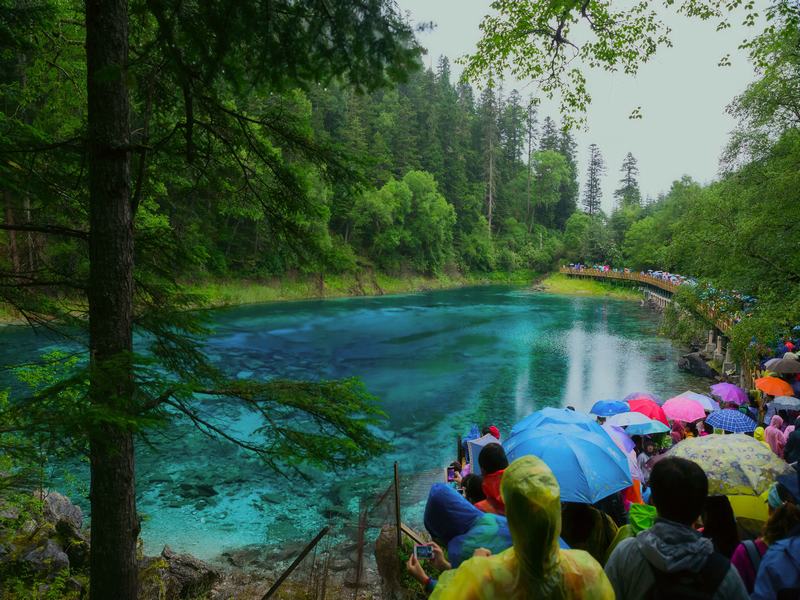
-Five Flower Lake (Wuhua Hai) — Often called the heart of Jiuzhaigou, this is the most photogenic spot in the park, with vibrant turquoise, emerald, and gold hues. Underwater logs and ancient tree trunks are visible through the crystal-clear water.
-Pearl Shoal and Pearl Shoal Waterfall — A wide calcified shoal where water rushes over a broad limestone step. This is the famous filming location of the classic Chinese TV series Journey to the West.
-Mirror Lake (Jing Hai) — Visit before 8:00 AM when the water is glass-smooth, perfectly reflecting the surrounding sky, trees, and snowy peaks like a natural mirror.
Zechawa Valley (The Highest Section)
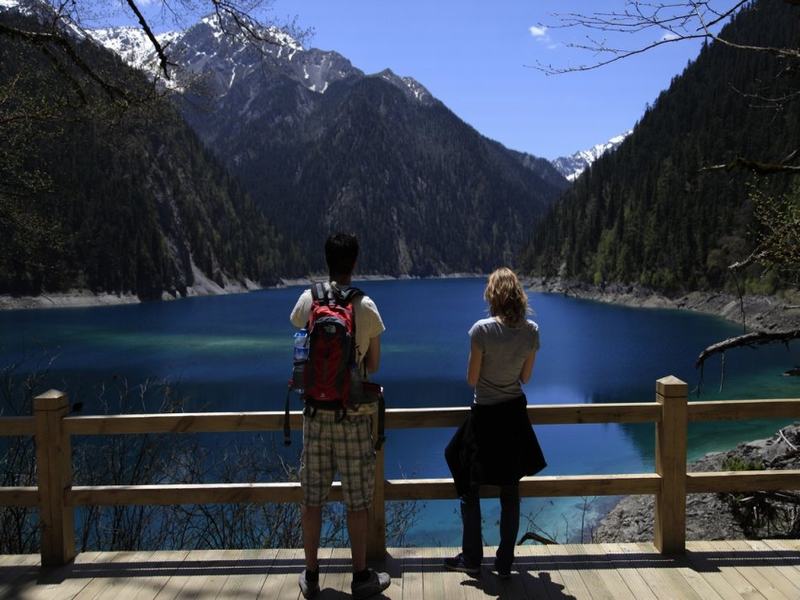
-Long Lake (Chang Hai) — At 3,101 meters (10,177 feet), this is the largest and highest lake in Jiuzhaigou, surrounded by prayer flags and majestic snow-capped mountains.
-Five-Color Pond (Wucai Chi) — The smallest but most vividly colored pool in the park, known as the "Eye of Jiuzhaigou." Its intense purple, blue, and green minerals shimmer and change with the light.

Shuzheng Valley (The Main Trunk)
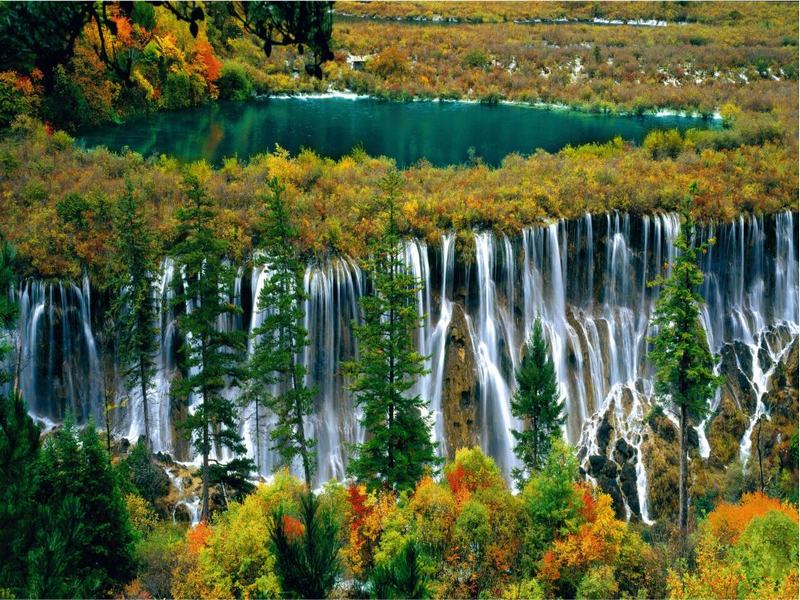
-Nuorilang Waterfall — One of China's widest highland waterfalls, spanning 270 meters (886 feet) across. On sunny afternoons, rainbows frequently appear in the mist.
-Shuzheng Lakes — A series of 19 terraced lakes connected by rushing streams, creating a fairy-tale "emerald necklace" when viewed from above.
-Reed Lake — A jade-green "Jade Belt River" winds through golden (autumn) or green (summer) reeds, creating a striking color contrast.

Unique Geological Features
Jiuzhaigou lies on the eastern edge of the Tibetan Plateau, where tectonic activity and limestone formations have shaped the terrain over millions of years. One of its most distinctive features is travertine deposition — a process where calcium carbonate from flowing water forms natural dams and terraces. These natural dams create the park's iconic tiered lake systems and gentle, wide waterfalls, producing a soothing soundscape that contrasts beautifully with the stillness of the lakes.
Rich Biodiversity and Conservation
Jiuzhaigou is part of the habitat of endangered species, including the Giant Panda and the Golden Snub-nosed Monkey, making it not just a tourist site but also an important conservation area. The park supports over 2,000 plant species across a complete vertical ecosystem, from mixed forests at lower elevations to coniferous forests and alpine meadows at higher altitudes.
Strict conservation policies limit visitor impact, helping preserve the valley's pristine condition. This balance between tourism and protection makes Jiuzhaigou a model for sustainable travel. As evidence of its enduring appeal, the scenic area surpassed 1 million visitors within the first three months of 2026, reaching this milestone 11 days earlier than the previous year.
When to Visit
Each season paints Jiuzhaigou in a different palette:
Autumn (mid to late October) — The most famous season, when fiery red, orange, and yellow foliage contrasts with the turquoise lakes
Winter — Waterfalls freeze into magnificent ice cascades, and a rare "blue ice" phenomenon appears on frozen lakes
Spring — Snowmelt increases mineral flow, making the lakes appear even brighter
Summer — Peak water volume enhances the power and grandeur of the waterfalls

Visitor Information
Location: Zhangzha Town, Jiuzhaigou County, Aba Prefecture, Sichuan Province, China
Opening Hours: Peak season 7:30 AM – Off-season 8:30 AM
Admission (2026 prices):
-Peak season (April 1 – November 15): 169 RMB entry + 90 RMB shuttle bus
-Off-season (November 16 – March 31): 80 RMB entry + 80 RMB shuttle bus
-Reservation: Real-name booking is required in advance via the official "Aba Tourism" WeChat platform
-Best Time to Enter: Arrive before 7:30 AM to beat crowds and capture the best lighting
-Altitude: 2,000 to 3,100 meters (6,560 to 10,170 feet) — walk slowly and stay hydrated to prevent altitude sickness
-What to Wear: Layered clothing with bright colors (red, blue, or white) for photos; anti-slip shoes recommended
-Prohibited: Drones, smoking, feeding animals, and entering the water
Cultural Experience
Jiuzhaigou is not just about scenery — it is also rich in Tibetan culture. Nine traditional Tibetan villages remain within the valley, and visitors can experience local customs, architecture, and cuisine. In 2026, a new immersive dinner show, the Princess Wencheng Banquet, debuted in the area, integrating the 1,300-year-old historical narrative of the Tang-Tibetan marriage alliance with the natural splendor of Jiuzhaigou. This marks a significant step from "single-scene sightseeing" to "in-depth cultural immersion".
Why Visit Jiuzhaigou?
Whether you are a photographer, a nature lover, a hiker, or simply someone seeking to witness one of Earth's most beautiful places, Jiuzhaigou Valley delivers an unforgettable experience. It is a place where reality proves more beautiful than any painting — a destination you must visit at least once in your life.