
Face-Changing Show
If you ask any traveler what they look forward to most in Chengdu, the spicy hotpot might come to mind first, but closely followed by the mysterious Face-Changing show. Known locally as Bianlian, this is the pinnacle of Sichuan Opera and a true wonder of Chinese intangible culture.
A Glimpse into History
To understand the Face-Changing show, we have to go back to the Qing Dynasty. According to historical records, the technique began taking shape during the reign of Emperor Qianlong (1736-1795) . However, the folk tale origins are even more thrilling: it is said that ancient people painted fierce patterns on their faces to scare off wild beasts, a concept later adopted by Sichuan Opera to portray the emotional turbulence of characters .
The technique was formally moved to the stage in the 1930s with the traditional play Gui Zheng Lou. In this story, a Robin Hood-like character named Beirong uses face changes to escape from pursuing soldiers . Back then, the tricks were simple—actors wore masks made of cardboard or paper. Today, however, it has evolved into a high-tech (yet traditional) marvel.
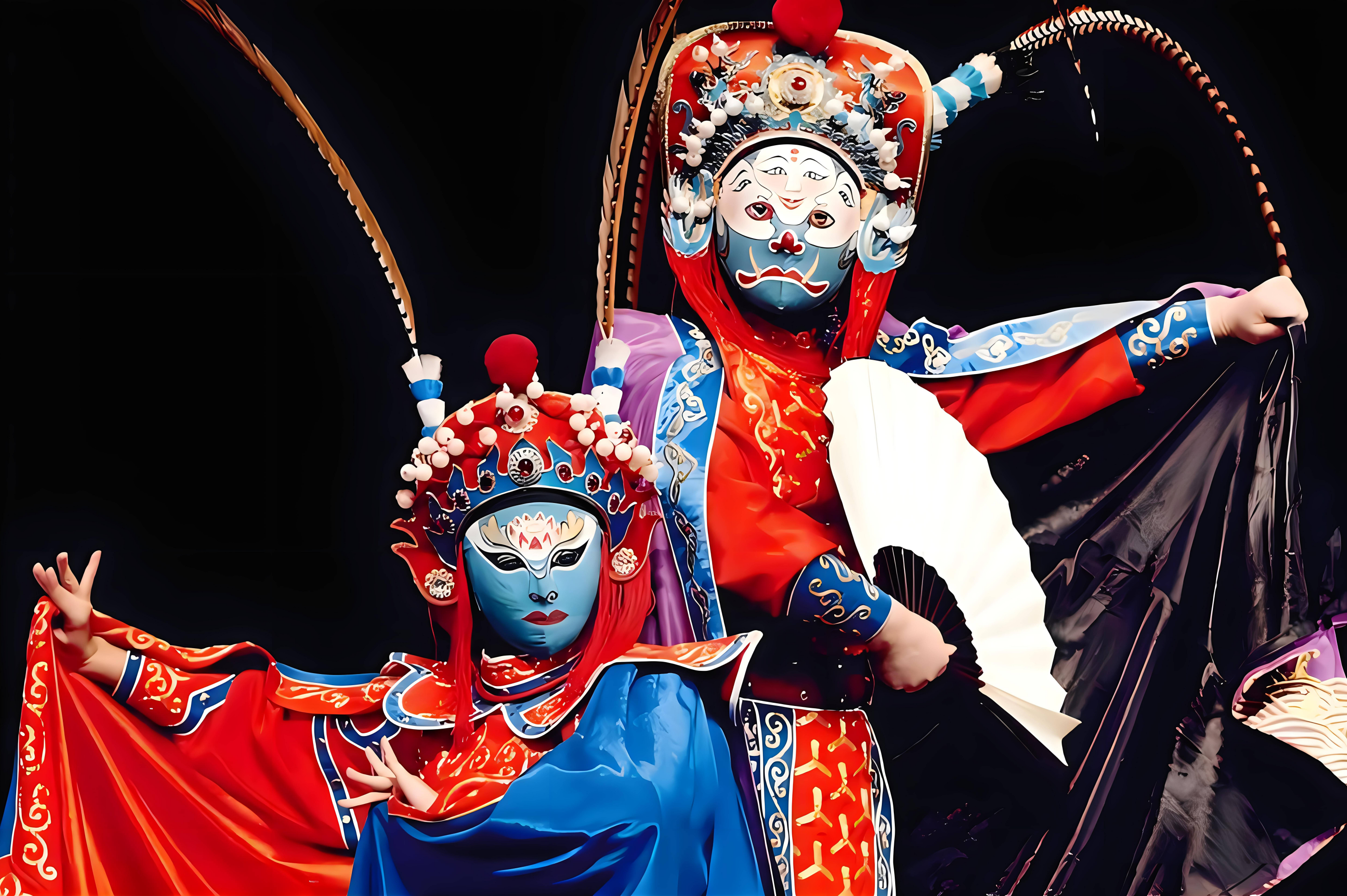
What Makes the Performance Unique?
The speed and secrecy of the Face-Changing show are what leave audiences breathless. With a flick of the wrist, a swish of a sleeve, or a simple turn of the head, the actor’s mask changes color, pattern, or entirely.
The 3 Main Techniques
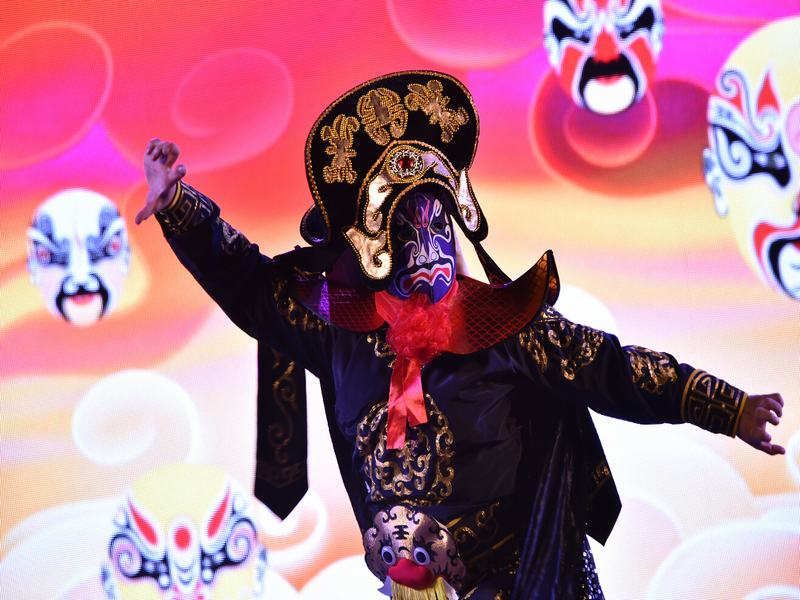
Experts classify the techniques into three main categories: Mo Lian (wiping), Chui Lian (blowing), and Che Lian (pulling) .
•Wiping: The actor rubs a specific spot on their face to reveal a different color of paint hidden underneath.
•Blowing: This involves blowing a puff of powder onto the face from a small box held in the hand.
•Pulling: This is the most complex method. The performer wears多层 multi-layered silk masks attached to hidden strings. When the timing is right, they pull the strings, removing a mask in a split second.
The "Fire Spitting" Finale
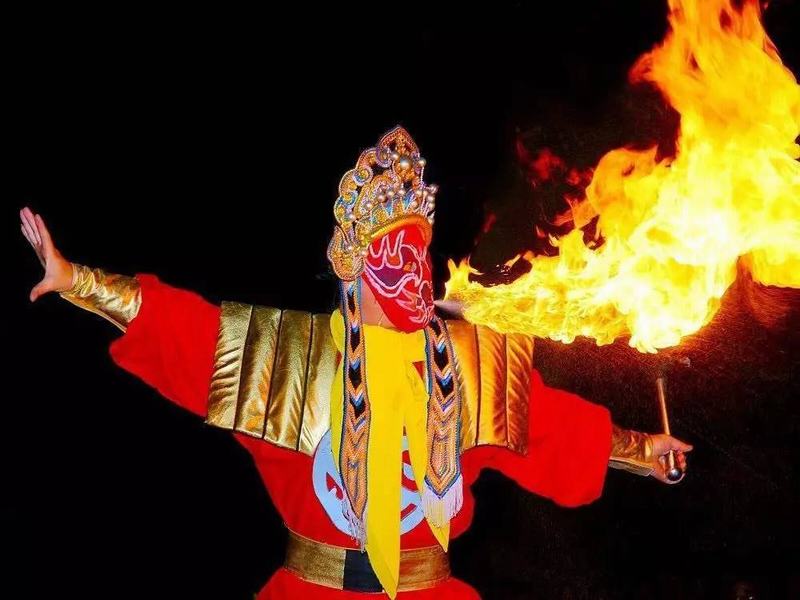
Often paired with the face change is the equally dangerous skill of Spitting Fire (Tu Huo). The actor breathes a spray of fuel over a torch, creating a massive fireball that lights up the stage. It requires years of practice; beginners often start with water before moving to oil to avoid burning themselves。
Best Places to See a Face-Changing Show in Chengdu
You can't leave Chengdu without seeing this. Here are the top venues offering the best Sichuan Opera experiences:
1. Shu Feng Ya Yun (The Top Pick for Culture)
Located in the Qingyang District, this theater is actually a historic opera teahouse. It is famous for having the best professional performers. The experience here is immersive: you sit in an old bamboo chair, sip traditional Gaiwan tea (covered bowl tea), and enjoy a full program of opera, acrobatics, and the grand finale of face-changing .
•Tip: Book VIP seats for the best view and free tea/snacks. Showtimes are usually in the late afternoon and evening.
2. Lihuiyuan (Best for Value & Interaction)
This venue has become extremely popular on social media for its high-energy, modern take on the classic art. It has two convenient locations (Wenshuyuan and Chunxi Road). The shows here are about 70 minutes long and packed with variety, including shadow puppets, long-spout teapot kung fu, and face-changing. The actors often walk down into the audience, allowing for intimate close-up photos .
•Tip: The Wenshuyuan branch is gorgeous for photos, surrounded by ancient red walls and traditional architecture.
3. Jinjiang Theater (For the Purist)
If you want to experience Sichuan Opera as the locals do—without the heavy tourist glitz—head to Jinjiang Theater on Huaxingzheng Street. This is where many elderly Chengdu natives go to watch complete traditional operas, complete with singing, acting, and the inevitable "wow" moment of the face change.
A Note on the "Secret"
For centuries, the technique of face-changing was a state secret, considered a "Level II National Secret" by the Chinese government. It is traditionally passed down only through strict master-apprentice relationships, and only recently have masters begun teaching it more widely to preserve the culture .
Recent news has even highlighted that young artists are pushing the boundaries; one performer recently set a Guinness World Record by changing masks 29 times in a single minute . Whether you see 5 faces or 20, witnessing a Face-Changing show in Chengdu is an experience that combines athleticism, theater, and magic all in one.
Good to know: Most shows run daily. Ticket prices vary by seat type: regular seats are typically ¥30–100, while VIP seats — offering a closer view and complimentary tea — cost around ¥150–580. Evening shows (around 8:00 PM) are usually the most atmospheric.